

Community Engagement and Belonging Gratitude
Welcome to our Community Engagement and Belonging Gratitude webpage. Here, we celebrate faculty, students, and staff whose good work on campus and in the broader Waco community exemplifies the kind of servant leadership that represents the best of Baylor’s Christian commitment.
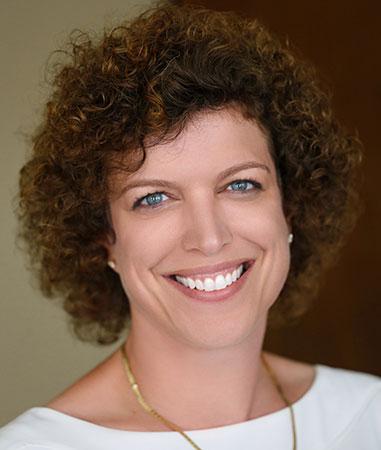
Today, the focus is on Dr. Sara Dolan, the associate dean for professional development in the Graduate School and Professor of Psychology and Neuroscience. As the associate dean, she works closely with graduate students to help them develop “personally, professionally, and spiritually.” This holistic approach means Dr. Dolan recognizes a focus on the whole person is an essential part of their maturation process. She also works closely with faculty who serve as graduate program directors as well as with staff across campus to leverage and develop programs for all students, including our international and online/hybrid graduate student populations.
In addition to the demands required from her associate dean’s role, somehow Dr. Dolan finds time to provide professional services to members of the Waco community. Her expertise in psychological evaluation/testing for people who struggle with alcohol and substance abuse aligns well with a community program called Recovery Court designed to help DWI offenders (specifically those convicted with a second DWI conviction) get on the right track. The McLennan County Recovery Court is one of three specialty courts headed by Judge Rob Swanton. The other two supervised by Judge Swanton include the Veterans Treatment Court and the Mental Health Court. Dr. Dolan as well as interns from the doctoral program in Clinical Psychology at Baylor work specifically with the Recovery Court program
The Recovery Court program offers rehabilitation outside the confines of jail. For example, DWI defendants can be sentenced to participate in Recovery Court instead of probation or jail. If defendants are sentenced to Recovery Court, they will be assigned a team of experts from various disciplines, Dr. Dolan included, to help them work toward sobriety. Treatment, rather than punishment, is the focus of the Recovery Court. Efforts to help change the lives of participants includes several community partners such as the McLennan District Attorney’s Office, the McLennan County Community Supervision and Corrections Department, local treatment providers and other members of the community.
Recovery Court is a twelve-to eighteen-month program consisting of four phases. Dr. Dolan’s time with the participants in Recovery Court occurs on Fridays. She is joined by a doctoral student intern who is a full-fledged member of the team. A typical Friday begins with an 8:00am arrival on campus. She leaves campus early enough to arrive to a 10:00-11:00am debrief with the doctoral student intern who provides evaluation and counseling services to DWI participants. The debrief allows Dr. Dolan to learn about the kinds of assessments and treatments the intern has offered to the participants in Recovery Court program while also providing opportunities to give constructive feedback to the intern. From 11:00-12:00pm, the team of experts convene privately with the judge to discuss each participant’s progress. For the next two hours each participant meets with the judge and the team to talk about their progress. Other participant in the program are there as well who can hear their fellow participant’s successes or setbacks. Participants who are doing well receive a reward, others who are struggling will receive feedback to help improve their behavior or a harsher penalty such as a sanction. A sanction could mean that a participant will be removed from the program and sent to serve out probation, short, or even long prison sentences. Sometimes, Dr. Dolan’s presence is not necessary during the last two hours of Friday’s Recovery Court. Other times, she sticks around when a participant is struggling, and especially when it is clear a participant will no longer be a part of the program. This allows her to offer support to the intern who has been working closely with the participant. In the words of Dr. Dolan, “the removal of a participant from the program can cause stress for the graduate student.” Certainly, the removal from the program is stressful for the participant as well.
As you can see, Dr. Dolan’s time with the Recovery Court program is demanding. Yet, she has not shied away from volunteering her time and expertise there. In fact, she has been working with the Recovery Court program since 2009 as the supervising professor for the Recovery Court Practicum course, which is the official internship course that routes doctoral students to the Recovery Court Program. Thus, Dr. Dolan is working directly with doctoral students, those sentenced to the Recovery Court program, and with members of the Waco community invested in helping people turn their lives around. I asked Dr. Dolan why she decided to take on this kind of difficult work. She quickly said, “this is [me] living out my faith through service.”
Dr. Dolan epitomizes one of Baylor’s core convictions to “extend the campus in time and space to embrace our entire community in relationships of caring and mutual benefit.”
Good work, indeed, Dr. Dolan.